QAnon Isn't Helping Children. It's Hurting Them.

If you haven’t heard of QAnon, consider yourself lucky. But if you've spent much time on the Internet in 2020, which you probably have given the pandemic and being stuck inside your house, it's likely that you've come across it while scrolling through social media.

Read More

John Joubert, Eagle Scout/Serial Killer

"To prepare young people to make ethical and moral choices over their lifetimes by instilling in them the values of the Scout Oath and Law" is the stated mission of The Boy Scouts of America (BSA). Established in 1910, the BSA is recognized worldwide as a distinct part of American culture, portrayed in countless movies, books and other forms of media. As of 2017, the BSA has 2.3 million members and about one million adult volunteers nationwide.

Read More

The Murder of Jesse Valencia

You can listen to my podcast episode on this case here:

Powered by RedCircle

For privacy information about data collected from using this player, click here.

You can also listen to this episode on Spotify, Apple Podcasts, Google Podcasts, Stitcher, or wherever you get your podcasts.


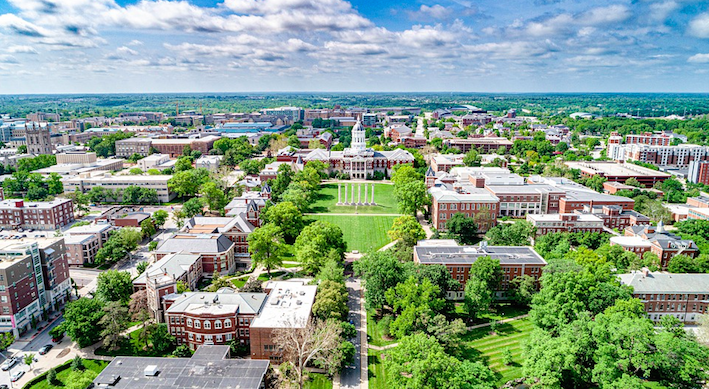
The early hours of June 5, 2004 saw college students at the University of Missouri stumbling back to their apartment buildings after a typical Friday night of partying. The university (also known as Mizzou), located in Columbia, Missouri, is currently attended by 30,000 students from across the United States and abroad. It is the largest university in Missouri, as well as the flagship campus of the University of Missouri System. 

Aerial view of University of Missouri (Mizzou) Campus (source: pixabay.com)

Aerial view of University of Missouri (Mizzou) Campus (source: pixabay.com)

It would still be a couple of hours before the sun would rise, but Columbia’s reputation as a relatively safe college town meant students felt secure enough walking home in the dark. Violent crime was rare; the majority of calls to the police were to report behavior typical of college campuses, for example, noise complaints and/or drunken and disorderly conduct. Later on in the morning in question, however, calls would be made to the Columbia Police Department regarding a far more sinister crime. 

Once they had sufficiently recovered from their hangovers, students emerged from their apartments to start the day. A group of friends were walking past a row of apartment buildings when they spotted someone lying on the ground between two buildings. They didn’t need to get much closer to see that the person was not just passed out on the grass. It quickly became apparent, given the amount of blood, that this person was dead.

No Accident

The police were called and quickly arrived at the scene. At first, they considered that this may have been a tragic accident. Given the location of the body between the two buildings, it was possible that the person had been drunk and tried to jump from the roof of one building to the other. 

Closer examination, however, led them to quickly rule out the accident theory. The body, which belonged to a young man in his 20’s, was naked apart from a pair of blue boxer shorts. The source of the blood on and around the body was a knife wound to the neck which was so deep, the blade had nicked the spine during the attack. 

Jesse Valencia

The body was identified as that of 23-year-old Jesse Valencia, a junior at the university majoring in pre-law. College life had been going very well for Jesse; he had plenty of friends, was excelling in his classes and earning some extra money working as a clerk at a local motel. He was also embracing life as a gay man. Being charming with classic good looks, he had no trouble finding romantic partners. 

Jesse was born in Danville, Kentucky on Feb. 22, 1981. His mother, Linda, began a relationship with Lupe Valencia when Jesse was very young. Lupe and Jesse bonded; Lupe would be the only father Jesse would ever know. Linda and Lupe had two daughters together, Rachel and Maria, whom Jesse adored. Lupe owned many horses, and passed his love of the animals onto Jesse. Jesse’s friends and family described him as a passionate, worldly person who loved life, was eager to learn and would always be there for a loved one in need.

Jesse Valencia (source: 13KRCG)

Jesse Valencia (source: 13KRCG)

Jesse and his mother Linda (source: NBC News)

Jesse and his mother Linda (source: NBC News)

The Night of the Murder 

Jesse had been working at the motel on the evening of June 4. When his shift finished, he made his way to a campus party, where he became quite drunk. A review of Jesse’s cellphone records revealed that he had had several conversations that night, including one with a fellow student named Ed McDevitt, which took place at 3:13am, lasting 2 minutes and 40 seconds. 

Detectives questioned Ed McDevitt, who confirmed that he and Jesse had been sleeping together. The last time they were together, he said, was two nights before Jesse was killed. On the night of Jesse’s murder, McDevitt told detectives that he was at home with his roommate, who confirmed his alibi.

The Investigation

The medical examiner estimated that Jesse had been killed sometime before dawn, in the spot where his body was found later that morning. The knife used to cut his throat had a serrated blade. There were no defensive wounds characteristic of a knife attack on Jesse’s hands, which initially came as a surprise to detectives. However, this finding made more sense when the medical examiner found marks on his neck consistent with strangulation. It was therefore determined that Jesse had been strangled and was unconscious before the perpetrator had cut his throat. 

Jesse’s apartment was about a block from where his body was found. When detectives arrived, they found his door was open, but there was no sign of a disturbance or any foul play having taken place inside. 

Under a pile of clothes, detectives found a used condom which was subsequently tested for DNA. The results of the test revealed the profiles of two individuals: Jesse and Ed McDevitt. 

More questions arose when DNA tests were carried out on Jesse’s fingernails. As was discovered on the condom, there were traces of Jesse and McDevitt’s DNA. But there was also a profile of a third, unknown individual. 

Detectives went about questioning Jesse’s friends, appealing for anyone with information from the night of the murder to come forward. One young man, Andy Schermerhorn, had some particularly interesting information to share. 

A Bizarre Tale

Schermerhorn and Jesse were friends with benefits, Schermerhorn informed the detectives. They had met several months earlier and had had sex a few times. One of these times, something completely off the wall had occurred. 

It was the middle of the night, and the two were in bed together when there was a knock at the door. Jesse got out of bed and opened it. A police officer, in uniform and shining a flashlight, entered the apartment. Schermerhorn, startled by the officer’s presence, sat up in bed and wrapped the sheet around himself. 

The officer told Jesse and Schermerhorn to carry on. Jesse reassured Schermerhorn that he knew the mysterious officer. Jesse then proceeded to invite the officer into bed with them. The three engaged in sexual activity, and when they were finished, the officer got up and dressed. He told Schermerhorn that no one could know about what had happened. Then as fast as he had appeared, he was gone. 

Jesse’s Secret Lover 

Unsurprisingly, the detectives and other police officers were seriously alarmed by the story. There was a possibility that whoever was responsible for Jesse’s murder may be one of their own. 

As it turns out, Jesse had spoken to his mother, Linda, about his relationship with the police officer, but never told her his name. In fact, Jesse may not have even known his real name. According to Linda, Jesse described the officer as “stalking” him, but he really did not know much about the officer at all. Jesse had expressed to Linda that he was becoming suspicious of the man, because he pretty much had no clue who he was. 

Andy Schermerhorn was asked to come to the Columbia police station and help identify the officer who had been in Jesse’s apartment that night. Identifying the man turned out to be easy for Schermerhorn; as he was walking down the hall of the station, another officer walked by. Schermerhorn was spooked. Once he arrived at the room where he was meant to be looking at the Columbia PD yearbook photos, he informed the detective escorting him that the man who had walked by them just seconds ago in the hall was the same man he and Jesse had been in bed with that night. 
A Dangerous Affair Begins

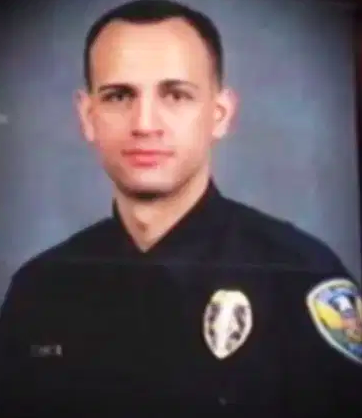
Steven Rios was a 27-year-old patrolman who had served in the Columbia PD for three years. He was married and had a new baby at home. According to his colleagues, he was a well-liked and respected member of the police force. His superiors were confident in his abilities and were sure he was headed for great success. Rios was described as ambitious, but a strict rule-follower. His colleagues at the Columbia PD were shocked to learn that Rios had been involved with Jesse and desperately did not want to believe that he had played any part in the murder. 

Steven Rios (source: heavy.com)

Steven Rios (source: heavy.com)

Jesse and Rios first met about two months before the murder at a party Jesse had attended. The police had been called to shut the party down. Jesse, who was known for being argumentative, ended up being arrested by Rios and given a municipal court summons for “obstructing a government operation” when he asked for probable cause. 

This was the beginning of the strange relationship between student and police officer; Rios drove Jesse to the station, asking him a number of personal questions on the drive. The day after the party, he came to Jesse’s apartment uninvited, saying he had more questions. But what he really wanted was sex. 

Over the next few months, Rios continued to come over unannounced and the two would sleep together. According to Jesse’s friend, Joan Sheridan, Jesse was upset that the charge from the night of the party had not been dismissed, given his relationship with Rios. 

“The next time the police officer comes over, I’m going to tell him that I have a little secret the chief of police might want to know,” he reportedly said to Sheridan. 

Rios in Denial

After the revelation from Schermerhorn, Rios was questioned. Initially, he denied having sexual relations with Jesse, but when confronted with the eyewitness testimony from Schermerhorn, he conceded that he and Jesse had been having sex. 

As for the murder, however, he vehemently denied any involvement, telling detectives he was at home in bed with his wife that night. Rios agreed to provide a DNA sample, which was compared with the DNA found under Jesse’s fingernails. It was a match, formally identifying the previously unknown third individual’s identity. However, the finding did not prove involvement in the murder on Rios’ part. Nor was the relationship between Rios and Jesse illegal. Following questioning by detectives, Rios was released. 

An Incriminating Discovery

When examining Jesse’s body again, the medical examiner noticed distinctive bruising across his chest, as well as between his shoulder blades. The bruising indicated that Jesse had been restrained using a chokehold technique called a “unilateral vascular neck restraint ”, the intention of which is to cause the person being restrained to fall unconscious in a matter of seconds. A law enforcement trainer viewed Jesse’s bruises and agreed that they may well have been the result of this type of restraint, but it was possible that the technique had not been administered properly and Jesse had fought whoever was trying to restrain him, causing more bruising. 

The bruising on Jesse’s back resulting from the chokehold he was placed in (source: youtube.com)

The bruising on Jesse’s back resulting from the chokehold he was placed in (source: youtube.com)

Detectives looked into Rios’ police file, finding that he had failed the defensive tactics course during his training, further adding to the evidence against him. 

As well as the bruising on Jesse’s chest, there were a number of small, dark hairs that were not Jesse’s. They turned out to be limb hairs, likely from the arm of the perpetrator who attempted the chokehold. Several of the hairs still had the root attached, meaning they could be tested for DNA. They came back as a match to Steven Rios. 

Rios is Charged 

Rios continued to deny any involvement in Jesse’s murder. However, it would be revealed that he was not, in fact, at home the whole night Jesse was killed. There was a 45 minute period in which he had gone out and no one could account for his whereabouts. 

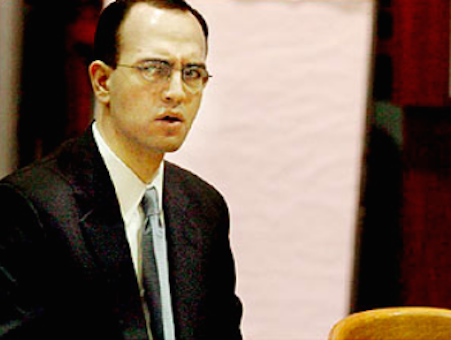
Charged with first-degree murder, Rios entered a plea of not guilty. 

Rios at the beginning of his trial in May 2005 (source: Murderpedia)

Rios at the beginning of his trial in May 2005 (source: Murderpedia)

During the trial, a law enforcement trainer demonstrated on prosecutor Morley Swingle the type of chokehold used on Jesse by Steven Rios (source: Murderpedia)

During the trial, a law enforcement trainer demonstrated on prosecutor Morley Swingle the type of chokehold used on Jesse by Steven Rios (source: Murderpedia)

Special Prosecutor Morley Swingle, who had been working on the case from the beginning, told the jury that on the night Jesse was killed, Rios had shown up at Jesse’s apartment unannounced as he often did. 

According to Jesse’s mother Linda, Jesse had found out that Rios was married with a child. Jesse had been apprehensive about the relationship from the start, but this new revelation helped make up his mind - he wanted to end the affair. Swingle argued that Jesse threatened to tell Rios’ superiors about their affair if he did not leave him alone. This enraged Rios, who did not want the affair to end, and definitely did not want his family or colleagues finding out about it. 

Rios quickly became aggressive with Jesse, causing Jesse to run outside to get away from him. But Rios came after him, grabbing him from behind and using the chokehold on him. The two struggled, but Jesse eventually fell unconscious. In a rage, Rios cut Jesse’s throat and ran away. 

Valerie Leftwich, Rios’ lawyer, attempted to smear Jesse’s character in defence of her client. 

She painted him as “promiscuous and loud-mouthed with a volatile personality”. She argued that he had many lovers who made better suspects than her client. 

"There will be evidence that Jesse Valencia had sexual contact with a lot of men he picked up over the Internet or that he picked up in a bar, including Steven Rios,” she said. 

The jury were not convinced by Leftwich’s flimsy arguments and sided with the forensic science. In May 2005, the jury in Rios’ trial found him guilty of first-degree murder. He was sentenced to life in prison without the possibility of parole. 

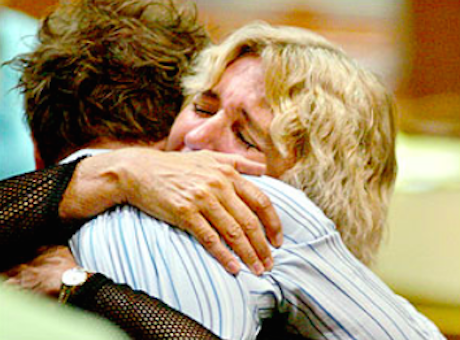
Jesse’s mother Linda cried and hugged Andrew Schermerhorn after Rios was found guilty of her son’s murder (source: Murderpedia)

Jesse’s mother Linda cried and hugged Andrew Schermerhorn after Rios was found guilty of her son’s murder (source: Murderpedia)

His first conviction was overturned by the Missouri Court of Appeals Western District because of “hearsay statements that were ruled inadmissible in court.” A new trial took place in 2008, in which he was found guilty of second-degree murder and “armed criminal action”. He was sentenced to life in prison plus an additional 23 years. 

Swingle remarked during the trial that Rios "used his badge for sex and then used his knife to forever close the mouth of his secret lover."

Jesse James Wade Valencia (Feb 22 1981 - June 5 2004)

Jesse James Wade Valencia (Feb 22 1981 - June 5 2004)


If you liked this article, check out the the case of Dorothy Jane Scott, who was murdered by her stalker. You might also find the The Murder Of Breck Bednar interesting.


The Death of Mitrice Richardson

Listen to my podcast episode on this case:

Powered by RedCircle

For privacy information about data collected from using this player, click here.


Mitrice Richardson was born April 30, 1985 to Latice Sutton and Michael Richardson in Covina, California. Michael and Latice divorced when Mitrice was very young, and Latice married Mitrice’s stepfather, Larry Sutton. Michael spent time in prison when Mitrice was a child (it is unclear what for), but on his release, he turned his life around, immersing himself in his career in the healthcare industry. While Michael did not play much of a role in raising his daughter, he and Mitrice became closer as she got older. 

Mitrice and her father Michael (found here)

Mitrice and her father Michael (found here)

Mitrice Richardson (source: patch.com)

Mitrice Richardson (source: patch.com)

Smart, pretty, thoughtful and kind, Mitrice was the type of person everybody wanted to be friends with. In 2008, she graduated from California State University at Fullerton with a BA in Psychology. An honors student who consistently achieved a 4.0 GPA, Mitrice was keen to go to graduate school. She began interning at the office of Ronda Hampton, a clinical psychologist and close family friend. At this point, she was living in South L.A. with her great-grandmother, Mildred Hughes, saving money working as a Go-Go dancer at a local nightclub. She also competed in beauty pageants and did some modeling.

Mitrice’s Life Takes a Turn

In the fall of 2009, Mitrice began showing signs that something was not right. She had recently broken up with her girlfriend of two years, Tessa Moon, but it was not just the sadness caused by the break-up that caused Mitrice’s changed behavior. 

Mitrice suffered from bipolar disorder; it is not clear when she was diagnosed, but up until that point, she appeared to have it under control. Latice began receiving strange texts from her daughter, and she began posting unusual things to her social media profiles. In one of her final Facebook posts, she wrote: “I just wanna sleep lol, but u know me and my crazy ideas...lets see where they take me.”

Becoming concerned, Latice tried to reach out to Mitrice on multiple occasions, but she would not answer her phone. 

Mitrice’s Last Meal

On Wednesday, Sept. 16 2009, Mitrice spontaneously drove from her great-grandmother’s home in South L.A. to Malibu, arriving around dinnertime. The drive is about 40 miles along a series of twisting cliffside roads. She pulled into Geoffrey’s, one of Malibu’s many high end restaurants, got out of her car, and approached the valet. The valet immediately got the impression that something was up; Mitrice was acting manic and talking about “avenging the death of Michael Jackson”. Thinking she might just be eccentric, the valet got into her car and parked it. On his return, he found Mitrice in his car (which he had left open) rifling through his glove box. He asked her if she was okay, and to please get out of his car. She complied, and walked into the restaurant. 

Geoffrey’s Restaurant (source: infatuation.com)

Geoffrey’s Restaurant (source: infatuation.com)

Mitrice walked up to a table of other restaurant patrons and invited herself to sit down with them. She made some bizarre statements, for example, that she was from Mars. The others at the table played along, as she was not threatening and they weren’t too worried about having their dinner disrupted. Mitrice ordered a Kobe steak and an Ocean Breeze cocktail. Her bill came to $89, but she was unable to pay. This is a little fuzzy - it is not clear whether she refused to pay, or could not pay because she did not have her purse which was in her car (but if she had left it, it is unclear why she could not just have gone out to her car to retrieve it).

The restaurant, being as accommodating as they could, asked if there was anyone they could call who could pay for her meal. Mitrice could only remember Mildred’s (her great-grandmother) number. Mildred offered to pay over the phone, but the restaurant required a faxed signature; Mildred did not have a fax machine.

The Police Are Called

At a loss, the manager of Geoffrey’s called the police. According to the L.A. Times, he did so because “he was worried about her welfare; he reasoned she would be safer in custody than out on her own.” He hoped that they would get in touch with her family and help her get home safely. 

(This would have been a model situation for calling a mental health professional, if such service were available, instead of the police. Unfortunately, such options were not available to the restaurant manager, and still don’t exist to this day.)

This is where things get messy; the following events demonstrate how badly the sheriff’s department handled everything. At around 9pm, three deputies from the Los Angeles County Sheriff’s Department (LASD) were dispatched to Geoffrey’s. They were under the impression that Mitrice was drunk or on drugs - the restaurant manager told the dispatcher that she was acting a “little euphoric -- a little odd”. On their arrival, they breathalyzed her, and she passed the sobriety test. They ended up arresting Mitrice on charges of “defrauding an innkeeper” and possession of marijuana (they found less than an ounce in her car). While they could have taken her in for a psychiatric evaluation, it appears that she was arrested because it was the “easier option”. The restaurant did not end up pressing charges against Mitrice for not paying her bill. 

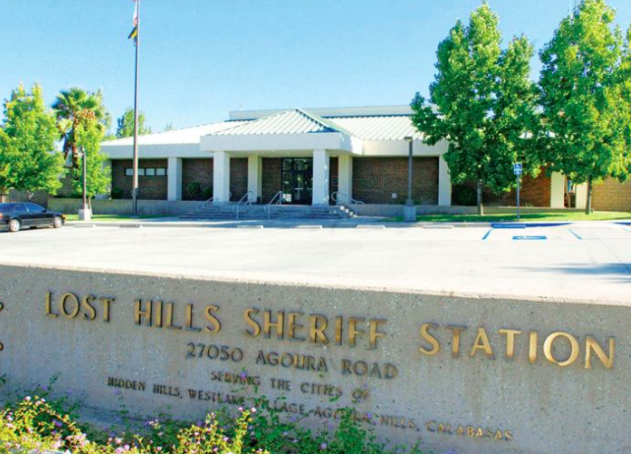
Mitrice’s car was impounded with all her personal belongings inside, including her phone, purse and ATM cards. The deputies drove her to the Malibu/Lost Hills Sheriff’s Station, about a 20 minute drive north of Malibu, where she was booked at 11pm. According to the station log book, Mitrice made 4 phone calls while in custody. She told the deputies they were to her great-grandmother, but the calls were not recorded due to faulty recording equipment. What is strange is that her great-grandmother insisted she never received any calls from Mitrice that night, and the phone company showed no record of the calls. 

Lost Hills Sheriff Station (source here)

Lost Hills Sheriff Station (source here)

Latice, Mitrice’s mother, found out about what had happened and called the station, asking whether they planned to keep Mitrice in custody for the night or release her. If they planned to release her, Latice said, she would come pick her up, as Mitrice was not familiar and she did not want her wandering off into the night. If they did not plan to release her, she would come and get her in the morning. It was the middle of the night and the drive from Covina to Lost Hills Station is about 50 minutes. She also had her younger daughter at home. Latice warningly joked with the deputy on the phone: “I would hate to wake up to a morning report: ‘Girl lost somewhere and her head chopped off.’”

The deputy assured Latice, multiple times, that they would keep her daughter in custody and release her in the morning. Latice was satisfied that Mitrice was safe, thanked the deputy, and hung up around 12:30am. 

Mitrice Is Released

Contrary to what the deputy told Latice on the phone, about 5 minutes after the call ended, Mitrice was released from custody. She was told that she could sleep in the lobby and wait for her mother to pick her up in the morning. But bear in mind, Mitrice was not of sound mind at that point, regardless of what officers might say. She was free to leave, and that’s exactly what she did - security footage shows her being discharged and leaving the station. This footage, however, would go “missing” for months, eventually being found in the desk drawer of the Sheriff's Dept. Captain Thomas Martin. 

It’s the middle of the night and the Lost Hills Station is in the middle of nowhere. Mitrice, without a purse, phone or even a jacket, began to walk back the way they originally drove to the station, towards the Santa Monica Mountains. It’s treacherous and near impossible to navigate in the dark. According to Google maps, it would take 6 hours to walk the 16 miles through the mountains back to Malibu (assuming it was light out, you had the right equipment and knew where you were going). Nobody knew where Mitrice planned to go when she disappeared into the night, but she never reached her destination. 

At 5:30am the next day, Latice called the station to inquire about picking up Mitrice, but was informed that she had been released and left. Latice was understandably upset that she had been lied to. Collecting herself, she asked the deputy on the phone how she could file a missing person’s report. Her concern, however, was met with indifference, and she was told it had not been long enough to file (she was told to wait 24 hours).

Some promising information did come in from a man named Bill Smith, a former reporter for KTLA News, who called the police to report a woman wandering around his backyard early that morning (likely around 6:30am, about 6 hours after Mitrice’s release). Smith’s residence, about 6 miles west of the Lost Hills Station, was located at the bottom of Dark Canyon in a gated community. Smith described her as a “slim black woman with afro hair”. Smith reported that he called out of his window to ask if she was okay, to which she responded she was “just resting”. By the time Smith had put something on so he could go out and investigate, she was gone, having disappeared back into the mountains beyond his home. 

A Botched Investigation 

From the beginning, the sheriff’s department completely mismanaged the investigation into Matrice Richardson’s disappearance. It became clear very quickly that they just didn’t care. They waited two days before they went to Bill Smith’s house, where they found tracks in the yard from sneakers that were not familiar to Smith, but they did not examine them further. 

They did search Mitrice’s car which had been impounded, finding personal items such as her diary. On reading her last entries, they found out that she likely had not slept for five nights, which definitely would have contributed to her manic behavior, possibly even delirium. 

Meanwhile, Latice was frantically calling the Sheriff’s Dept., trying to file a missing person’s report. Mitrice’s missing persons case was transferred to the Los Angeles Police Department because they had better resources for searches, etc., but the LAPD was located an hour away from the Malibu/Lost Hills Station where she actually disappeared. 

(I’m not sure how much responsibilities were divided between the LAPD and the LASD. The sheriff’s department continued to be involved despite the transfer, and as we’ll find out, were extremely irresponsible throughout the investigation.)

The family were promised a massive two day search would begin on Saturday Sept. 19th, three days after Mitrice disappeared. They were going to pull out all the stops, using helicopters, search dogs, every resource available to them. 

When the day arrived, however, there were four deputies canvassing some of the neighborhoods in the area. Mitrice had been missing for three days at this point and the police had virtually no information; not that they were seriously looking for any. The search on the 19th ended before it even got dark. It was meant to begin again on the 20th, but it never did. It was, by all accounts, a total joke and a slap in the face to Mitrice’s family, who were becoming increasingly convinced that the police were just not interested in finding her. 

Unable to rely on the authorities, the family took matters into their own hands. They made flyers, spending days passing them out and carrying out their own searches. 

The Sheriff’s Dept. Go On the Defence

Meanwhile, after realizing how bad Mitrice’s disappearance could look for them, the Sheriff’s Dept. began fiercely defending their conduct on the night of her disappearance. They made statements aiming to justify her arrest at the restaurant, but insisted that when they released her, she seemed perfectly fine: 

“She was lucid, she didn’t exhibit any mental problems,” said Steve Whitmore, an L.A. County Sheriff’s Department spokesman. He then referred to the sobriety test she had taken at the restaurant. 

Latice, however, did not believe a word of it. The reason the police had been called in the first place was because the restaurant manager believed something was wrong with Mitrice; multiple people would back this up. Latice later said: “If the officer saw her behavior and decided to administer a field sobriety test, he must have realized something was wrong.”

The excuses the sheriff’s department came up with for letting Mitrice go evolved over time. They first claimed the jail was too full (this was later proven to be untrue). They then said that they had no reason to keep her there (even though they had told Latice they would not release her until morning). Finally, a jailer used the excuse that they “are not a babysitting service”. 

Sheriff Lee Baca 

Sheriff Lee Baca (source: LA Times)

Sheriff Lee Baca (source: LA Times)

A bit of an aside - Sheriff Baca was the L.A. County Sheriff from 1998 - 2014. A quick Google search on his name shows that he is, by all accounts, the very definition of a “bad cop”. He was involved in multiple scandals during his time as sheriff, including lying to the FBI about abuse of inmates in L.A. County jails. In February 2020, he began a 3 year sentence in Federal Correctional Institution La Tuna, a low-security prison outside El Paso, Texas for his role in obstructing this inquiry.  

Paul Tanaka, second in command at LASD, was sentenced to five years in prison for obstructing the same investigation. Tanaka also had ties to white supremacist gang, the Lynwood Vikings (they sound like real stand-up guys, don’t they?)

Baca was never interested in Mitrice’s case and wanted nothing to do with her family. He constantly dodged their requests for more information, for example, the security footage and his deputies followed his lead. Despite lying and gaslighting her family, he insisted that his department never did anything wrong.  

Michael Richardson Takes A Stand 

Frustrated with the lack of progress being made in the investigation into his daughter’s disappearance, Michael Richardson decided that enough was enough. Why wasn’t Mitrice’s case getting the attention it deserved? Michael called the Mayor of Malibu, Andy Stern, to demand that more be done. Stern, not particularly interested in what Michael had to say, told him he was on his way to a meeting and did not have time to talk. 

But Michael was not going to give up so easily. Stern was also a Malibu real estate magnate, whose properties went for millions of dollars. Michael called him on his real estate business number, but this time told him he was a famous football star interested in purchasing one of Stern’s properties. This got Stern’s attention; he offered to cancel the meeting he had planned and come meet him right away. 

When Stern realized who Michael was, he was mortified; a story like this one would be really bad for him as mayor. In November 2009, as a result of Michael’s efforts, the city of Malibu authorized a $15,000 reward for anyone with information regarding Mitrice Richardson’s disappearance and current whereabouts. 

Finally, A Real Search 

On January 10, the Los Angeles Sheriff’s Department finally conducted the kind of search Mitrice’s family had been hoping for; one of the most extensive searches for a missing person ever carried out by the LASD. The search included 336 trained searchers, scouring 18 square miles of ridges, canyons and trails, on horseback and on-foot, aided by dogs. A helicopter picked up searchers, dispatching them to harder-to-reach areas. 

While the search turned up no evidence as to Mitrice’s whereabouts, it gave Michael Richardson hope that his daughter was still just missing. 

“The beautiful thing about today is that they didn’t find a cadaver,” he would say after the search. 

“Lost” Video Footage Appears 

Mitrice’s booking photo from the night she disappeared; bear in mind Mitrice was usually very well made up and would never go out with her hair like this, according to Latice (source: patch.com)

Mitrice’s booking photo from the night she disappeared; bear in mind Mitrice was usually very well made up and would never go out with her hair like this, according to Latice (source: patch.com)

Mitrice’s family continually asked for the security footage from the Lost Hills Station the night she disappeared, but their requests were ignored. They were lied to for months about whether it even existed. It wasn’t until March 2010 that they were asked to the station to view the footage from that night (which seemed to magically appear from the Chief’s desk drawer).

There were multiple red flags which the footage brought up: for one, parts were edited out. Right away, Latice could tell her daughter was not well and not acting like herself. She was distressed and acting manic. Footage of Mitrice inside her cell showed her struggling and acting erratically: “She’s grabbing at a door where she’s swinging back and forth,” Latice said. “She’s pulling at the back of her hair.”

For Latice, it became that much more evident that her daughter was really suffering that night, and the deputies had shown no compassion or humanity towards her. Due to the information from the LASD being so sketchy and incomplete, their true actions that night were never fully revealed. 

As a result of finally being able to view the footage, Latice filed a negligence and wrongful death lawsuit against Los Angeles County and Sheriff’s Department officials. The main reason for filing the lawsuit, she said, was to give them the right to demand information about the night Richardson was arrested: “This magical lawsuit will allow me to obtain every single document in the hands of the Los Angeles Police Department and to depose every officer and detective involved.”

Mitrice Is Finally Found 

August 9, 2010 saw the discovery that everyone had been dreading, nearly 11 months after Mitrice went missing. Latice was coming to terms with the painful reality that her daughter was almost definitely dead, while Michael was holding out hope still that Mitrice was out there somewhere. 

Around 1pm, park rangers were patrolling the rough, mountainous terrain of Dark Canyon in search of illegal marijuana grow operations, which were known to occur in these locations due to their remoteness. Reaching these spots is no easy feat; there are no trails, so it requires scaling steep rock faces and cutting through much of the wild undergrowth. 

The area they were searching is about 8 miles from the Lost Hills Sheriff’s Station, and 2 miles from Bill Smith’s home, where Mitrice had last been seen alive. They were making their way through a deep ravine when they came across a human skull. The park rangers called in their finding at 1:30pm. Deputies arrived around 3pm, and needed to wait for a helicopter to take them down into the ravine.  

At 5pm, a 7-person team from the coroner's office arrived, with the expectation that they would be required to follow the standard protocol for when a body is found: photographing the remains, inspecting the site for clues and establishing a crime scene. However, this was not to be; you won’t be shocked at this point to find out that the sheriff’s department completely bungled the handling of Mitrice’s remains also. While detectives were airlifted to the location of the remains, the coroner’s team were not. In fact, I don’t believe the coroner’s team were ever airlifted down - a total departure from how a crime scene would usually be handled. 

Mitrice’s family were notified that remains had been found and that they likely belonged to Mitrice. When the family asked if they could come to the site, however, the deputy on the phone was rude and dismissive, saying there was no point in coming. Latice asked how they would treat the site, i.e. would they be treating it as a crime scene, and when they would be removing her daughter’s body. The deputy told Latice that the area would be secured and treated as a crime scene, and that the remains would be airlifted out in the morning, because it was too dark to take them that evening. 

But instead of doing as they said they would, at 8pm that evening, the deputies haphazardly gathered up the remains they could find, put them in the helicopter and flew back to the station. Unsurprisingly, they didn’t look very hard and there turned out to be many bones missing. The coroner’s office was shocked at the actions of the sheriff’s department. As the L.A. Times reported, the coroner insisted that "he was 'very clear' with sheriff's officials [regarding how the remains should be handled], and could not think of another case in which a police agency had moved entire skeletal remains without coroner's approval."

On August 13, Sheriff Baca made a statement, announcing that the body which had been found in the ravine was that of Mitrice Richardson. "We have no indication of a homicide at this point. I don't believe that the remains are capable of telling us a story," he said. Baca went on to say that they only found a “skull and some bones”, which was untrue. In fact, they also found a large portion of mummified remains. 

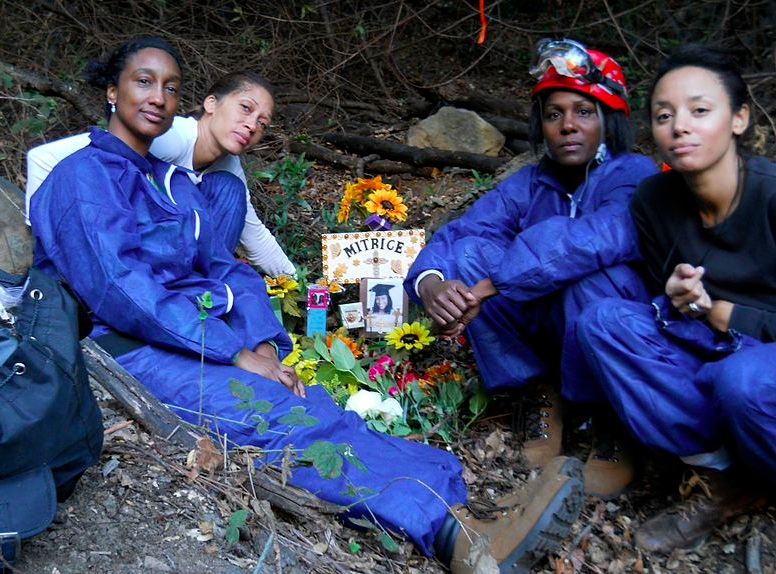
Latice (front left) with three friends, set up a memorial in the location Mitrice’s remains were found (source: Wikipedia)

Latice (front left) with three friends, set up a memorial in the location Mitrice’s remains were found (source: Wikipedia)

Latice was able to convince Baca to let her and a small group of close friends go to the scene. While they were there, they set up a small memorial. While looking around, they found one of Mitrice’s finger bones. This further demonstrated how careless the sheriff’s department had been when they had originally been on the scene. 

How Did Mitrice End Up There?

There is a lot of speculation about what really happened to Mitrice that night, despite the assertion from LASD that there was no foul play (what with how badly they handled everything in this case, it’s not surprising that there are doubts about their conclusions). One LAPD detective would later tell Los Angeles Magazine, "It sounds like someone abducted her, killed her and at some point dumped her body.”

Her clothing was found slightly further up the ravine from the majority of her remains, and did not show signs of having been removed by animals, suggesting either she removed them herself or someone else did. 

There were also some bones, for example her femur bone, found part way up the ravine. Mitrice’s hyoid bone, which would likely have been broken if she had been strangled, was never recovered. 

Mitrice’s family and friends are also convinced that her death was not an accident. Ronda Hampton, whom Mitrice had been interning for, said: “The problem that I have with this case is (investigators) were too quick to conclude that it was not murder. They never put out there that there is a possibility of homicide. There is no way Mitrice could have hiked that canyon.”

Some believe that because some of the body was mummified, it may have been buried somewhere else, dug up, and then dumped in the ravine later. 

The official coroner’s report called the cause of her death undetermined; if they had been able to follow proper procedure, they may have been able to make a more solid determination. 

Aftermath of Mitrice’s Death

Latice and Michael filed a wrongful death lawsuit against the LASD, citing that Mitrice should not have been released from jail that night as she was showing clear signs of mental instability. They were awarded $900,000, which they split equally between them. 

Mitrice’s family have never faltered in their pursuit of justice. In February 2016, California Attorney General Kamala Harris agreed to open an investigation into Mitrice’s death after receiving a heartfelt letter from Michael Richardson, in which he wrote:

"You see, Ms. Harris, I look at you and I see Mitrice Richardson. A young, intelligent, smart, black, and beautiful young lady who busted her butt in school to one day become someone who could be helpful and make a difference."

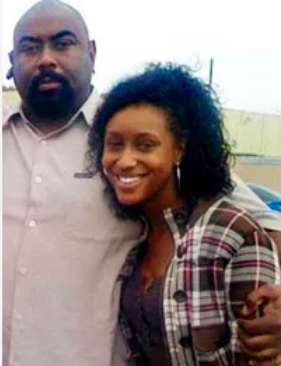
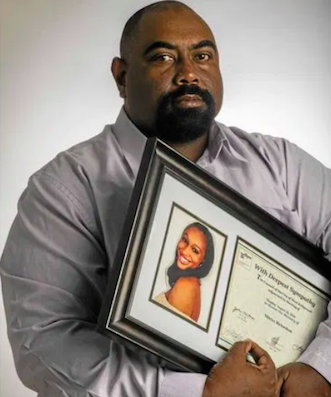
Michael Richardson continues to seek justice for Mitrice (source: LA Daily News)

Michael Richardson continues to seek justice for Mitrice (source: LA Daily News)

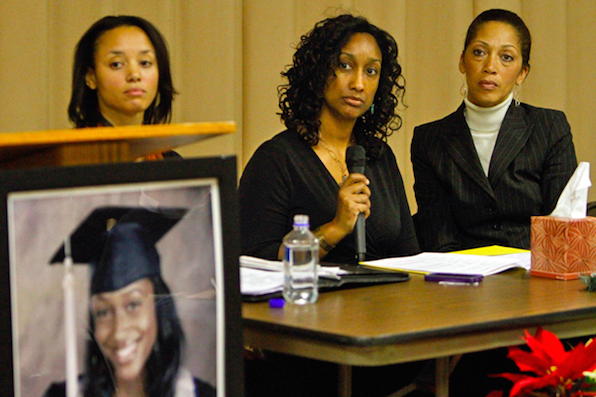
Latice Richardson (center) at a press conference (source: here)

Latice Richardson (center) at a press conference (source: here)

However, after looking into the case for nearly a year, AG Harris’s office sent a letter to Michael Richardson explaining that they could find no evidence of wrongdoing in the handling of Mitrice’s case by the LASD, and they would be ending their inquiry. Michael, gravely disappointed with the decision, accused AG Harris of only taking interest in his daughter’s case to gain publicity during her race for the United States Senate (to which she was elected in November, 2016). “Kamala Harris is a phony,” he said. “We don’t need people like that leading us.” 

There was another glimmer of hope when the new L.A. County Sheriff, Alex Villanueva, at a memorial service for Mitrice at the New Testament Church in Los Angeles on Sept. 7, 2019, announced that he wanted to assess the whole case from the beginning with a set of fresh eyes. However, a few weeks later, Sheriff Villanueva announced that there would not be a new investigation, as he had reread the department’s investigation and saw “no reason to rehash a case already subjected to investigations by the state attorney general’s office, the Los Angeles County district attorney’s office and the Sheriff’s Department’s internal review.”

This was another blow to the family, particularly because Villanueva was basing his decision on the case report by the sheriff’s department under Sheriff Baca, which had been so neglectful and unhelpful during the investigation into Mitrice’s disappearance and death.

He did go over the changes in the LASD which would take place to avoid what happened to Mitrice happening to someone else. Now, a missing person’s report for an adult can be filed right away, instead of waiting 24 hours, as the deputy on the phone told Latice the night Mitrice disappeared. Deputies will ensure that people have their cellphones and other personal belongings before the are released from jail. Most importantly, Villanueva said that people exhibiting mental health problems would be evaluated before being released.

Mitrice’s case has never been closed, Villanueva said, and the department continues to welcome any new information. 

My Thoughts

As I referred to at the beginning of this piece, I strongly believe that funds given to police departments should be reallocated. Mental health services, for example, are horribly underfunded. Mitrice Richardson would likely still be alive today if a mental health hotline existed. 

Mitrice’s case also raises many questions about the conduct of the sheriff’s department  - how can they receive so much money and yet fail a victim and their family so miserably? They were neglectful and careless both while Mitrice was in custody and during the investigation into her disappearance. What exactly were they being paid for? 

Another question which must be addressed is why did they not care? Was it because Mitrice was a black woman? Was it to do with the fact she was a lesbian? Would her disappearance have been treated differently had she been a white woman? In my opinion, this is very likely. 

Even if they didn’t kill her directly, their actions definitely played a role her death. If they had been responsible and showed some compassion, and just kept her in custody as they said they would, she would have gone home with her mother. Mitrice Richardson did not have to die. The deputies who showed such blatant disregard for her life should be held accountable. 

Mitrice Richardson (4/30/1985 - 9/17/2009)

Mitrice Richardson (4/30/1985 - 9/17/2009)


Other cases like this one that you might find interesting include the mysterious Jamison Family deaths and the Freeway Phantom Murders.